Have you ever watched someone deliver a joke with a blank face and wondered how they do it? Deadpan comedy takes a simple comment and turns it into a clever punchline. With a calm tone and steady gaze, it makes you stop and really listen.
It’s kind of like sharing a secret handshake with the audience. From old silent films to today’s sitcoms, this style of humor plays with timing and contrast to catch you off guard. Every pause and subtle delivery lets you discover the wit hidden in everyday moments.
Stick with us while we dive into why this one-of-a-kind comedy style keeps fans laughing time after time.
Defining Deadpan Comedy and Its Key Traits
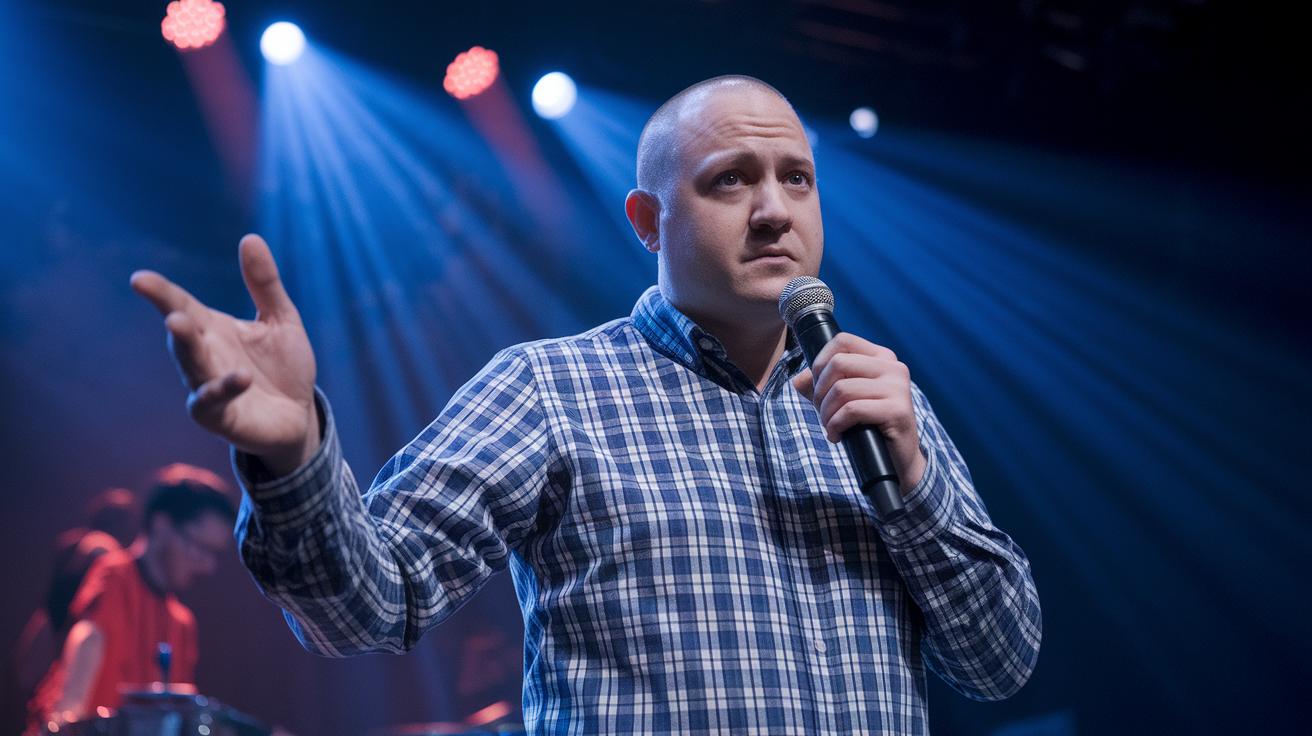
Deadpan comedy is a style where jokes come out in a flat tone and with a blank face. Comedians use a calm, controlled way of speaking that makes even the simplest punchlines hit much harder. For example, a deadpan performer might say, "I woke up today, and honestly, my alarm clock barely registered my existence."
Deadpan comedy relies on spot-on timing. The trick is to deliver each line with a serious tone even if the joke is clearly absurd or ironic. Imagine a comedian quietly remarking, "Sometimes I wonder if my reflection has more feelings than I do," all while keeping a neutral look. This approach forces you to really listen to the words and notice those perfectly placed pauses.
At its heart, deadpan comedy plays with the surprise of matching serious delivery with funny observations. The flat voice and minimal expressions highlight the quirky contrasts in everyday life. This careful mix of dry delivery and clever timing turns simple remarks into jokes that catch you off guard. It is this unique blend that keeps fans coming back for more dry, understated humor.
Historical Evolution of Deadpan Comedy
During the days of silent films, Buster Keaton starred in more than 70 movies with a face that barely changed. His steady look created a new style where the humor came from tiny, thoughtful expressions instead of big, wild ones. Keaton's simple, clever style still brings smiles to audiences today.
When live acts hit the stage, deadpan comedy took on a fresh twist. Bob Newhart's debut album in 1960 used a soft, almost chatty tone that made every joke feel personal. Then in the mid-1980s, Steven Wright captured attention with his smart one-liners delivered in a flat, even voice. Their routines laid the groundwork for a dry humor that fans of subtle wit still love.
TV later brought this style into many scripted shows. Hits like The Office and Parks and Recreation featured quiet characters whose flat delivery made the funny moments pop. Their calm nature clashed with the silliness of everyday life, proving that even a soft, low-key presentation can spark a big laugh.
deadpan comedy Exudes Clever Subtlety

Deadpan comedy works by using a calm, steady tone paired with slow pacing. It guides you to feel the humor without shouting it out loud. Instead of forcing a laugh, the style hints at the punchline so you catch it with a quiet smile. For example, when someone says "I tried breakfast; even my cereal was bored" in a flat tone, it surprises you with its clever twist.
- Keep your voice even so that the punchline lands just right. Try saying "My toast was burnt" with the same neutral tone as any other line, letting the twist stand out naturally.
- Maintain a relaxed, straight face while adding tiny expressions, like a quick eyebrow raise, to catch the audience off guard.
- Use a deliberate pause before the punchline to build a little suspense, much like a brief lull before something funny happens.
- Limit your physical movements so that every word and subtle cue comes through clearly.
- Adjust your timing with slight delays after key lines to create a sense of tension that makes the humor hit even harder.
- Practice a smooth routine that sharpens your delivery, letting even a gentle smile add another layer to the joke.
This mix of subtle cues and controlled pauses turns every small movement into a secret hint that makes the humor feel just below the surface.
Deadpan Comedy in Film, TV and Live Performance
Film really brings out the magic of deadpan comedy. Think about Buster Keaton in his silent films or Wes Anderson in The Grand Budapest Hotel. Their calm faces and measured lines let every little gesture speak for itself. Bill Murray in Rushmore shows how a simple, straight look can change an ordinary scene into a clever moment. Picture a character saying, "I'm not surprised" with such a relaxed face that the humor sneaks up on you.
TV also plays with this subtle style. Shows like The Office (both UK and US), Parks and Recreation, and Portlandia give us little moments where a quiet glance says it all. Everyday office quirks or small-town oddities suddenly become funny when delivered with barely a reaction. It’s like catching a secret smile in the middle of a normal day.
On stage, stand-up comedians make deadpan work their own way. Look at Steven Wright's 1985 HBO performance or Norm Macdonald on SNL Weekend Update. Their dry one-liners, with almost no change in expression, build a soft tension that makes the joke hit all of a sudden. A brief pause here or a tiny delay there is all it takes to amplify the humor.
| Performer | Notable Work | Style Note |
|---|---|---|
| Buster Keaton | Silent Classics | Calm physical comedy |
| Wes Anderson | The Grand Budapest Hotel | Quiet visual storytelling |
| Bill Murray | Rushmore | Simple, deadpan delivery |
| Steven Wright | 1985 HBO Special | Quick one-liners |
| Norm Macdonald | SNL Weekend Update | Subtle dry humor |
Sketch comedy also gets a lift from deadpan delivery. Take shows on SNL, for example, where performers like Aubrey Plaza use minimal expressions to transform brief skits into memorable, wry moments.
Why Audiences Connect with Deadpan Comedy

Deadpan comedy has a quiet charm that catches you off guard. A simple stage act with few expressions turns even a small pause or flat tone into a surprise punchline. The actor's calm words make you think for a moment, and then, bam!, a joke hits you like a shared secret.
Fans love this style because it feels like joining a quiet, insider chat. The slight chuckle and minimal movement show that the performer and you are on the same wavelength. It's a gentle nod that says, "I'm in on it too."
Tips for Crafting Your Own Deadpan Comedy Performance

Start out by practicing in front of a mirror. Watch how your face stays calm while still showing just a little hint of humor. Record yourself so you can tweak your timing. For example, try delivering a one-line joke like "I checked the weather, and it still doesn't care about me" in a completely flat tone. See if that slight pause builds the right tension.
Next, write your jokes without any extra embellishment. Keep your setups and punchlines short, clear, and emotion-free. Practice these lines in front of the mirror, letting your quiet look do most of the talking while your words make the impact.
Then, work on adding tiny pauses between your lines. Adjust these micro-pauses just enough so that each word lands perfectly without any extra gesture. This careful control creates a subtle build-up that can turn a simple statement into something memorable.
For more ideas on structuring your routine, check out how to write comedy sketches for helpful tips on planning your deadpan performance.
Final Words
In the action, we explored deadpan comedy in all its understated glory. We broke down its key traits, traced its roots, and uncovered the techniques that give a monotone delivery its unique punch.
We shared simple tips for embracing a dry humor style while keeping the performance fresh. Deadpan comedy remains a fun and engaging force, making every subtle moment on stage feel like a clever wink to the audience.
FAQ
What are some examples of deadpan comedy in film, TV, and online platforms?
The deadpan comedy examples refer to films like silent classics and quirky modern movies on Netflix, TV series that use subtle humor, and online clips on Reddit and YouTube showcasing this witty, expressionless style.
What does dry humor mean and what are some dry humor examples?
The dry humor definition and examples speak to a style where jokes are delivered with a flat tone and minimal emotion, making the humor feel smart and understated through subtle, deadpan delivery.
What does it mean to deliver comedy in a deadpan way?
The comedy delivered in a deadpan way means jokes are told with a monotone voice and straight face, using minimal emotion to create a striking contrast that makes the humor hit harder.
What does deadpan mean and what does a deadpan facial expression look like?
The deadpan meaning refers to performing with little to no emotion, and a deadpan facial expression shows a calm, expressionless look that amplifies the humor by keeping reactions understated.
Which actor, comedian, and stunt performer is known for his deadpan expression?
The deadpan expression hallmarked by a renowned actor, comedian, and stunt performer is best seen in Buster Keaton, whose stone-faced style in silent films elevated his iconic comedic approach.
